Wednesday, April 11, 2007
Spice Girl
Sunday, April 08, 2007
Buona Pasqua
When I was growing up, my mother and her sisters would congregate at somebody's house on Good Friday afternoon, pour themselves each a glass of wine, and churn out five pies, one for each sister and her family, and one for their parents. Over the years we've tried a few different recipes (in addition to the original cement one). But the one I made last year, and shared with my aunts this year, is my favorite: in addition to the meats and cheese, it includes chopped spinach and roasted red peppers (and skips hard-boiled eggs entirely). It's colorful when you slice it, and at least gives the illusion of being vaguely healthy (notice I said illusion).
It's a pretty simple recipe, made more so if you have a few extra sets of hands helping you, as well as the aid of a food processor. You make a basic pastry dough and divide it in two pieces, one for the bottom and one for the top. Once you've laid the bottom piece of dough into a springform pan, you layer in the ingredients, alternating between spinach, mozzarella, ricotta (blended with parmesan cheese and three egg yolks--you knew they'd show up somewhere), peppers, prosciutto, pepperoni and salami.
Sunday, April 01, 2007
The Once and Future Classic Cookbook
Over the past six years or so, I've probably looked at hundreds of cookbooks. Working in publishing facilitates this, naturally; my job has afforded me the luxury of writing about great works of culinary education, like The Gourmet Cookbook, and it has also subjected me to mining the sorry excuse for a cookbook that is a Suzanne Somers collection, trying to find some redeeming quality.So when I saw an article in the April issue of Gourmet singling out recent cookbooks that writer Cynthia Zarin believes have "staying power," I was of course interested. "It seems like a new cookbook is published every few minutes," Zarin writes. "Which of the most recent crop are destined to become classics?" And what, you may ask, makes a cookbook a classic? My definition of a classic cookbook is one that serves as a standard of excellence in its genre, that will endure and be pulled off the shelf for consultation for years to come.
Here's Zarin's list (in alphabetical order):
1. Arabesque: A Taste of Morocco, Turkey, and Lebanon by Claudia Roden
2. Baking: From My Home to Yours by Dorie Greenspan
3. Breakfast, Lunch, Tea by Rose Carrarini
4. The Improvisational Cook by Sally Schneider
5. In Search of Perfection by Heston Blumenthal
6. Kaiseki: The Exquisite Cuisine of Kyoto's Kikunoi Restaurant by Yoshihiro Murata
7. The Kitchen Diaries by Nigel Slater
8. The Lee Bros. Southern Cookbook by Matt and Ted Lee
9. The Soul of a New Cuisine: A Discovery of the Foods and Flavors of Africa by Marcus Samuelsson
10. Vegetable Harvest by Patricia Wells
I remember flipping through Samuelsson's book and mainly being struck by the vibrant colors and overall high quality of the book itself, though I can't say I ran home to try the recipe for Ethiopian bread (though I also must say I haven't seen too many gourmet African cookbooks, so I can see how this one could qualify for "classic" status). I heartily second Zarin's mentions of both Baking and The Lee Bros. Southern Cookbook. Greenspan's collection of desserts is fabulous; her almond biscotti came out wonderfully both times I made them, and the book is a pleasure to leaf through. The Lee brothers, meanwhile, have created a terrific volume on Southern cuisine. I learned tons from their book, not the least of which was how to make good old fashioned sweet tea.Now, to the real reason I posted Zarin's list: so I could offer up my version of the most-likely-to become-classic recent cookbooks. Drumroll, please:
1. Baking: From My Home to Yours by Dorie Greenspan
2. The Best Recipes in the World by Mark Bittman
3. The Bon Appetit Cookbook by Barbara Fairchild
4. Bones: Recipes, History, and Lore by Jennifer McLagan
5. The Joy of Cooking by Irma S. Rombauer, Marion Rombauer Becker, and Ethan Becker
6. The Lee Bros. Southern Cookbook by Matt and Ted Lee
7. A Passion for Ice Cream by Emily Luchetti
There you have it, seven cookbooks recently published (I dug as far back as 2005) that I think will become classics. Fire away with your suggestions!--S
Wednesday, March 28, 2007
From My Pad to Yours
One Sunday afternoon in February I was strolling about town and wound up at Barnes & Noble. Somehow I found myself browing through what is probably the most-used cookbook I own, Mark Bittman's How to Cook Everything. I know, this makes no sense. Among a bajillion new books I gravitated to the one I knew best. Anyhow, there I was, idly flipping the pages, and landed on a recipe for Pad Thai. Now there's something I'd never made. I'd always been a little afraid of attempting to cook the famous noodle dish, figuring that as a New Jersey-raised Italian-American I probably would not be a natural (also, Alton Brown's recipe looked really scary--the prep time is 12 hours and 40 minutes --as if!). But if any book could demystify Pad Thai for me, it might be HTCE. So I scribbled down the ingredients on an author event flier and headed to the store.
The result of this random experiment was not fabulous, but promising. I made the dish in a wok, using rice noodles, grapeseed oil, garlic, shrimp, eggs, fish sauce, sugar, bean sprouts, red pepper, peanuts, cilantro and lime juice. Things moved quickly ("add garlic and cook, stirring, for 30 seconds. Add the shrimp and cook, stirring, for another 30 seconds. Add the eggs and let sit for 15 seconds"). Although I'd arranged all my ingredients beforehand, I hadn't actually measured out a tablespoon of sugar, 2 tablespoons of fish sauce, etc. Rushing to pour things into spoons, I think I burned the eggs and who knows what else. But the result was tasty enough to set me off on doing some Pad Thai research.
A wok is not built for heat retention or long and even cooking, unlike Western style pots and pans. A Le Creuset pot, for example, is built like a marathon runner, slow to warm up but has long staying power. A wok, on the other hand, is more like a sprinter. It heats up really fast, and loses it just as quickly. The thin iron steel material in a good wok transfers more or less all the heat from the flame directly to the content inside. This is great for the ability to control heat, you can turn the fire up and down and the heat in the pan will rise and fall just as quickly. This also means that a wok can sear and cook a small amount of food lightening fast. Adding too much all at once and letting the heat escape would turn a wok into a useless piece of tin in a blink of an eye. And since the caramelization and charring from a hot wok is where the wok-flavor, or wok-breath as some call it, comes from, your utmost goal in wok-cooking is to start out hot and keep it hot! Make sure that all your ingredients are at room temperature, and that you add them in sequence and let the wok reheat back up before each addition. At no time should you add a huge amount of ingredients all at once, unless you want a Pad Thai stew.
I have since made Pad Thai twice. Both times I successfully avoided Pad Thai stew and burnt eggs. This week's version was sweet, sour, spicy and sensational.--S
Pad Thai
12 ounces rice noodles, preferably vermicelli
3 tablespoons peanut (preferred) or other oil
2 tablespoons minced garlic
1 cup peeled shrimp, roughly chopped (or use small shrimp and leave whole)
2 eggs, lightly beaten
2 tablespoons fish sauce
1 tablespoon sugar
Salt, if needed
1 1/2 cups mung bean sprouts
1/4 cup roasted salted peanuts, chopped
1/2 teaspoon crushed red pepper flakes, or to taste
Minced cilantro leaves
2 limes or lemons, quartered
1. Soak the noodles in warm water to cover until soft; this will take from 15 to 30 minutes. You can change the water once or twice to hasten the process slightly. Drain thoroughly, then toss with half the oil.
2. Heat the remaining oil over medium-high heat in a wok for a minute or so, until the first wisp of smoke appears. Add the garlic and cook, stirring, for 30 seconds. Add the shrimp and cook, stirring, for another 30 seconds; don't worry about fully cooking the shrimp.
3. Add the eggs and let sit for 15 seconds or so, until they begin to set. Then scramble with the shrimp and garlic, breaking up any large clumps. Add the fish sauce and sugar and cook, stirring, for 15 seconds. Add the noodles and toss and cook until heated through. Taste and add salt as needed. Add 1 cup of bean sprouts and toss to distribute through the noodles.
4. Tun the noodles out onto a platter and garnish with the remaining bean sprouts, the peanuts, a sprinkling of crushed red pepper flakes, and some cilantro. Squeeze some lemon or lime juice over all and serve, passing more lemon or lime separately.
Recipe courtesy of How to Cook Everything
Saturday, March 24, 2007
Jersey Pizza
A Mano
24 Franklin Ave.
(Chestnut St.)
Ridgewood, NJ 07459
(201) 493-2000
TWO SPORKS
The Bergen Record's article on A Mano, a new pizzeria in Ridgewood, NJ, begins, "It took a week for a craftsman from Naples, Italy, to build the brick ovens. Today, it will take a half-hour more to build, light and monitor the fire." And it will take four requests, two waitresses, and a good 35 minutes to get your entire order (including water) if you go in on a Saturday afternoon.
In fairness, the food at A Mano, which opened in January, is quite tasty. The pizzas are "Neopolitan-style," which means dinner plate-sized; topped not with sauce but with plum tomatoes; and modestly sprinkled with fresh mozzarella. The dough--which spends a night and the following morning rising--is cooked in ovens that burn at 1,000 degrees. When I ate there with my family today, we ordered a Pizza Margherita, a Pizza alla Funghi and a house salad. And some water. The quality was great; we left full and sated. But A Mano, which opened two months ago, has a few kinks to work out.
The Margherita came first. We sat there admiring the beautiful steaming pie, inhaling its fiery aroma, and then realized we had no plates. Waitress flagged, the plates arrived. And the pizza was indeed delicious. Mom and Laura, who have spent many a summer evening perfecting homemade grilled pizza, agreed this pizza tasted more like their own version than any restaurant's ever had. The crust was airy; the flavors light and fresh.
After about 10 minutes the salad arrived, another fresh creation topped with diced fresh mozzarella and grape tomatoes; and almost simultaneously, our Pizza alla Funghi, which was just as tasty as the Margherita, with a variety of sliced, sauteed mushrooms. This was all very enjoyable, except we were really thirsty. And then--miracle of all miracles--a bottle of sparkling water came down from the heavens. Alleluia! Oh, wait, we needed glasses.
A Mano is just getting over that two-month hump. We'll give them a few more tries. Their pizza is yummy, and hey, the waitresses wore neckerchiefs. They're dressed up like Super Mario Brothers, and anybody enduring that kind of fashion torture deserves a second chance.--S
Monday, March 19, 2007
Lean on Me

Every baker has that one book they turn to in a time of need. For example, when she needs to bring dessert to a friend's house for book club, or when she's visiting Fork's parents and wants something tasty but not too, well, froufrou. Or, sometimes she just needs a good ol' oatmeal-raisin cookie or blueberry muffin.
For me (and quite possibly my mom, sister, cousin Kathy and my Aunt Betty), that book is Kathleen's Bake Shop Cookbook, by Kathleen King. Aunt Betty gave me my copy at least seven years ago and my edition is plastered with her Post-It notes.
King, who once owned the Hamptons bakery Kathleen's and now owns Tate's, has penned my go-to baking book, with a little extra editorial help from Aunt Betty, of course. I've tried recipes for everything from Banana Muffins (which I mailed to Sarah last year for her birthday, with a jar of almond butter--the perfect accompaniment) to Peanut Butter Squares (essentially a homemade version of the Reese's peanut butter cup). All winners.
This weekend I made Kathleen's Chocolate Chip Cookies. "One of her specialty cookies," AB says. "Should be crisp." What do you know? Right again.--S
Friday, March 16, 2007
It's What's For Dinner
Wolfgang's Steakhouse4 Park Ave (33rd Street)
New York, NY 10016-5339
(212) 889-3369
THREE SPORKS
It's hard for me to believe my good friend Eric is leaving New York City. Alas, as he explained last night, "there was time when I got more out of the city, but now, the city gets more out of me." So, in honor of his migration north I suggested that we celebrate with a farewell dinner at a place he'll really miss when he's gone: Peter Luger, the venerable Williamsburg steakhouse. Eric, you see, is in league with historic T-rex as one of the world's great carnivores. And Peter Luger is the best steak in the world. Or, is it?
"Make it Wolfgang's and you got a deal!" Eric suggested.
Wolfgang's it is. At some point in Luger history it seems a wall came down and waiters and Maitre D's bonded in servitude to Peter Luger for decades suddenly bought their freedom, and left to make their own meaty futures, with Luger's beef connections, cooking process and steaksauce recipe in hand. Wolfgang's is one such place. Is it better than the Original? Well, it certainly is a lot nicer than the beerhall that is Peter Luger. It's easier to get to. They serve a mean cocktail, unlike Luger, of which I had too many last night. The waiters are not as crusty as Luger's. And, they take all major credit cards.

As for the menu, it's pretty much the same, which is just fine when you're being compared to Peter Luger. If you've never done a great New York Steakhouse, pay attention. This is how you do it: First, go with a fearless friend, like Eric. Daintiness is not tolerable. Second, forget wine. You want a draft beer or a cocktail. Next, sart with a strip of charred canadian bacon. Yes, bacon. It may sound like a bit much but it really sets off the palate, especially for the next course: oysters and little neck clams on the half shell. Then, the main event: steak for two, medium rare, served sizzling, the bone blackened, the meat crisp on the outside and perfectly red on the inside. For sides, German potato salad and creamed spinach. For dessert, well, why have the sorbet now? Go for the chocolate-chip chocolate sundae.
I couldn't have imagined a better meal for Eric and me to share. We ate and drank for three hours before saying goodbye. I understand what Eric means when he says the city is now getting more out of him. But certainly I got more out of the city for having Eric here, and it won't be the same without him.--F
Tuesday, March 13, 2007
One Croque Monsieur, Hold the Vermin!

A new day has dawned for New York diners, and you can thank the rats. After a pack of the little buggers made national news by commandeering a KFC/Taco Bell in the west village and mugging for the cameras, the board of health realized it might just have to go to work. The result is a food-cop reign of terror that saw our beloved neighborhood bistro, L'Express, become one of 83 restaurants closed by the health department in the days after the embarrassing rat episode.
Also closed was the popular Union Square eatery, the Coffee Shop. And the owner is pissed. Co-owner Charles Milite told the New York Post that a city inspector scoured the place for 3 1/2 hours instead of his usual 60 to 90 minutes. "After 17 years of business and a clean bill of health, they have decided we cannot store a sealed jar of olives on the floor, we need rubber gloves in our resuscitation kit, and we must place end cups on fluorescent lights in our dish area and prep kitchen," they wrote in a notice posted on the restaurant's entrance.
If you know the Coffee Shop, it is a popular place right on Union Square that serves homey, if pretty average food. It's known mostly as a hangout for models and aspiring actors, so if someone is throwing up after eating at the Coffee Shop it is probably because they're purging, not food poisoned. I'm sure most diners are more concerned about catching an STD there than food poisoning. I don't even want to think about where the rubber gloves from their rescusitation kit ended up. Nevertheless, Milite's right when he says he smells a backlash simmering at the Department of Health.
What does closing down all these restaurants really accomplish? The real, practical effect is that each restaurant's hardworking staff are needlessly losing their pay.
L'Express is a fine esablishment. Spoon and I often go there for their authentic bistro fare: they serve an excellent warm goat cheese salad, a killer croque monsieur, and they make their own delicious lyonnaise sausages, pate and duck liver mousse. Sometimes, I find myself craving escargot. It's also a great place to kick back with a fat cafe au lait, or a glass of wine or a beer.
I'll admit, my second thought after hearing they'd been closed for 24 hours, after "what a shame," was "what better time to dine there than the day after coming back from a department of health closure?" So, Spoon and I had a lovely, ultra-sanitary meal there upon their reopening, which we finished with a creme brulee. Just our way of letting our friends at L'Express know we never doubted them. --F
Monday, March 12, 2007
Spicy Asian Pork
Daylight savings time is here, and for me that means the start of many months of running outside in the evening--a magnificent time of year indeed. Spurred on by the glorious blue sky over the Manhattan skyline as I headed back up the East River on my way home, inspiration struck, in the form of an idea for dinner that was light, fresh and kind of spring-like.
I've made Spicy Ginger Pork in Lettuce Leaves many times, and tonight was as tasty as all the rest. This is a very easy dinner to make; once you've done your prep, it takes less than 10 minutes to cook. You need a bunch of Asian sauces, but if you make stir-fries somewhat regularly, you've probably got them on hand already. Tonight, for instance, I only had to pick up the meat, a bell pepper, water chestnuts and lettuce. Handing over a sweaty $10 bill to the cashier at the grocery store after a run is always kind of embarassing, but it's a small price to pay for the spring/summer ritual of an evening run and a homemade dinner.--S
Spicy Ginger Pork in Lettuce Leaves
3/4 pound ground pork [I use a mix of ground pork & veal]
1 red [or green] bell pepper, finely diced
1 garlic clove, minced
1 tablespoon minced peeled ginger
1 tablespoon Thai sweet chile sauce [I use General Tsao's Stir Fry Sauce, from Trader Joe's]
1 tablespoon Asian fish sauce
1 teaspoon Asian sesame oil
1 tablespoon plus 1 teaspoon grapeseed oil
One 8-ounce can whole water chestnuts, drained and diced
2 scallions, thinly sliced
2 tablespoons oyster sauce
2 tablespoons chopped cilantro
24 Boston lettuce leaves
1. In a medium bowl, combine the ground pork with the bell pepper, garlic, ginger, chile sauce, fish sauce, sesame oil and 1 tablespoon of the grapeseed oil.
2. In a large skillet or wok, heat the remaining 1 teaspoon of grapeseed oil until shimmering. Add the pork mixture and stir-fry over high heat, breaking it up, until it is cooked through and starting to brown, about 8 minutes. Stir in the water chestnuts, scallions, oyster sauce and cilantro and remove from the heat.
3. Spoon the pork into bowls. Stack the lettuce leaves on plates. To eat, spoon the pork onto the lettuce leaves, roll up and eat.
Recipe courtesy of Food & Wine, Aug. 2006
Sunday, March 04, 2007
And Many More...

Jack's Luxury Oyster Bar
101 2nd Avenue
(Bet. 5th and 6th)
New York, NY 10003
(212) 673-0338
FOUR SPORKS
We at Spoon & Fork have a birthday tradition: on birthdays, our gift to each other is a great meal at one of the city's top restaurants. Fork started started the tradition on Spoon's 25th birthday with a meal at Wylie DuFresne's first love, the soon-to-be-closed 71 Clinton Fresh Food. In the ensuing years we've celebrated birthdays with Wylie (who Fork also knows from his softball league: DuFresne is a left-handed power hitter in addition to a culinary genius) at WD-50, with Mario Batali at Babbo, Esca, Del Posto, and Casa Mono, a star-studded, palate pleasing evening at Nobu and Shun Lee Palace. It's an impressive list that'd be tough to rank.
Last night, in honor of Fork's 40th, we added Jack's Luxury Oyster Bar to the list. We'd heard good things about the place, and we'd expected a good meal. But we never expected that Jack's would actually top that list. It may very well be the best experience we've had for a birthday meal--and they have all been special meals, so yes, high praise indeed.
What made the meal so memorable? First, of course, the food. We are seafood lovers, and every dish was exquisite. Fresh, mostly raw seafood accented with homey, landlubber touches like Cape Cod potato chips. The room is tiny, seating only about 16. The ambiance is romantic, but contemporary and not corny. Even the music was sensational, from old Bob Dylan to Art Brut. The service was first-class, personable and precise without being formal. They really seemed to care that we enjoy every single aspect. And we did.
Ah, to the menu. As usual for our birthday dinners, we opted for a tasting menu. Our philosophy is that it's always best to let the chef cook for you. This was a wise choice: the tasting menu was comprehensive, and a shocking value: although everywhere we read online listed the tasting menu at $75 per person, it was $50 on this night, for six stunning courses.
The meal began with a selection of fruits de mer: Washington State and Virginia oysters, littleneck clams, shrimp, and caviar on a toast point. A perfect start. Each bite was refreshing, icy cold and oceany, smooth and delicious and flavorful. Next, tartare: coho salmon for Fork, served with warm Cape Cod chips; big-eye tuna for Spoon. At this point, we were thrilled. Once again perfectly prepared, and the perfect second course. The third course, a knockout: homemade duck liver mousse served in little jars, topped with port gelee, served with a spoonful of black truffles and whole-grain mustard and toast points. In a word: decadent.
Just the thing to lead us to... more decadence and a triumphant piece-de-resistance: butter-poached lobster with pistachio, green beans, enoki mushrooms and lobster jus. All of it washed down with Fork's favorite wine, a crisp Muscadet. It was with this triumph of a dish that we began entertaining the notion that Jack's could possibly contend with Nobu for Most Amazing Birthday Dinner Ever.
After the lobster course, we were intoxicated. The flavors were still swirling in our minds, familiar flavors that we loved, but also new and complex at the same time. Just when we thought couldn't eat another bite, dessert began. First a palate cleanser of pear sorbet drizzled with a fresh vanilla bean cream. We wiped that out. Then a complimentary taste of Sauternes, a spectacular French dessert wine. At this point, NO WAY we could eat another bite, right? Until the dessert arrived: Jack's take on smores: so delicious we wiped that out too...
We can't wait to go back to Jack's Luxury Oyster Bar. Friendly, inventive, familiar yet new flavors, great music and ambiance, and a great value... it is a gem. It may not always beat Nobu, but on this enchanted evening, believe us when we say we have a new champion. --S&F
Wednesday, February 28, 2007
Is That Creamed Spinach or Are You Just Happy to See Me?

Jeffery Chodorow's crusade against New York Times' food critic Frank Bruni just gets better. This week Chodorow offered Caribbean vacations to employees who spot Bruni in his restaurants. You have to wonder what kind of veiled threat this really is. I mean, what happens after Bruni is spotted? Does Chodorow order the chefs to defile the critic's soup?
Bruni, meanwhile, came back with a pitch-perfect reponse to Chodorow's screed, one worthy of his background in Italian politics: he gave a star and rave review to Robert's Steakhouse at the Penthouse Executive Club. Yes, our fearless food critic braved a sea of lapdancers to sample the beef, and wrote about the night with a surprising sense of humor even though, Mr. Chodorow will no doubt note, he's not a comedian. I believe the steaks were good. But honestly, what's the point of this review? How many Times' readers are really going to go to the Penthouse Club for the steaks?
"If Chodorow lives up to his insane public rant, he now has to follow in Bruni's footsteps and sit down in a potentially spooge-soaked banquette for his own counter-review of this distinguished eatery," Anthony Bourdain observes. "The message seems to be 'even a freakin' strip club where you get lap dances offered between courses is better than your soulless, overpriced meat-emporium.'" In other words, if this was a poker game, Bruni, no pun intended, just raised the stakes.
"One might ask if it's ever a good idea," Bourdain adds, offering Chodorow a little good advice, "to spend $40,000 to remind the public that the New York Times think you suck and that you are the genius responsible for MIX, the lunatic-sounding CAVIAR AND BANANA, the public melt-down called ROCCO'S, the joke-magnet ENGLISH IS ITALIAN and the rumored SPOTTED DICK."
Your bet, Mr. Chodorow.--F
Sunday, February 25, 2007
A Weekend in Washington
I was in our nation's capital recently visiting my friend Anne, who left NYC for greener pastures (or more trees, anyway) last year. My dear pal gamely oriented me to the city, explaining its layout and basics. Naturally, I grilled her on what foods are quintessentially "DC." Understandably at a loss, she checked her Eyewitness Guide, but its suggestions, while mildly interesting, were generally lukewarm and included Caesar Salad and southern breakfast foods like grits. Not really in full food discovery mode anyway, I let Anne guide me, and wound up with some delicious meals.
She'd reserved us a table for Friday night at Petit Plats, a French bistro a few blocks away from her Woodley Park apartment. It was a lovely restaurant in a converted townhouse, with four (!) fireplaces and a French-speaking host, whose little daughter was doing her homework at the bar and chatting with Maman about le week-end. The pureed vegetable soup was excellent; it was followed by a classic herb-roasted chicken with french fries. Aside from the portions (which were huge), it was a très French meal and the perfect spot for us girls to catch up.
Saturday evening found us in Georgetown, where Anne and I did some pre-dinner shopping (including a stop at a great cosmetics shop called Blue Mercury, where I somehow got talked into getting a makeover). Made up in full Trish McEvoy fabulousness I stunned the crowd at Clyde's of Georgetown, a
bar/restaurant established in 1963. Frommer's says Clydes is a hangout for "university students, Capitol Hill types, affluent professionals, Washington Redskins, romantic duos, and well-heeled ladies who lunch"--or dine, as the case may be. We started with a crab and artichoke dip (served with French bread) that had ample bites of both ingredients. I followed this with a burger with sauteed mushrooms that ruled. It was delicious. After dinner we progressed to another local watering hole, Martin's Tavern, which may or may not have been the place
where young congressman John F. Kennedy proposed to journalist Jacqueline Bouvier (a guide to the restaurant's famous clientele, which was in a small frame on the bar, was rather unclear, and after a few glasses of wine we had some difficulty following it). Nonetheless, Martin's is a fine establishment with a homey vibe and good drinks.But Caesar and grits, listen up: I'll be back.--S
Thursday, February 22, 2007
Somebody Call the Waaaaaaahmbulance!

Jeffery Chodorow, the successful (just ask him) Manahattan restauranteur who brought us such gems as, well, Rocco DiSpirito (!) has lost his mind. How best to punish the New York Times for a bad review of Kobe Club , Chodorow's latest adventure in bad judgement? By placing an expensive (between 40K and 115K reportedly) full page ad of course!
Pissed off from one too many bashings from Times critic Frank Bruni, Chodorow snapped. He challenged Bruni's credibility, a tired subject at this point. "The drama critic is probably not a plumber," Chodorow writes. "The art critic is probably not a CPA. The fact that he's a good writer does not make him an expert on restaurants." Chodorow makes his point by noting that in Rome Bruni covered Italian politics, not food. Don't you just love the egomaniacal self-importance infused in that sentiment? Sure, this Bruni guy might be able to make sense of the arcane political systems that underpin all aspects of Italian life, but understand what goes on in a kitchen? Naaaaaaah!
This tearjerking excerpt is the best part of Chodorow's ad, though:
"Ever since my ill-fated collaboration with Rocco DiSpirito on the TV show, The Restaurant, critics for the New York Times (and certain other publications) have been very hard on me. This was no exception. Admittedly, there was that one errant clam (out of a 3-tier seafood tower). Unfortunately, bad clams happen, occasionally, but how does a review in which the main player, Kobe beef, is acknowledged by Mr. Bruni to be perfectly prepared, warrant zero stars?

I don’t know what I actually did to engender these personal attacks on me. I opened Rocco’s with the best of intentions. After all, what’s a better story than a talented
avant-garde chef going back to his roots to cook the food he grew up on with the mother he loves. I also love my mother so it was easy for me to be seduced by the
idea. I don’t think anybody could have predicted that outcome."
Allow me to explain, Mr. Chodorow. How does a perfectly prepared Kobe steak warrant zero stars? When it is served in an ugly room and is laughably overpriced. Personal attacks? I did not percieve this review as an attack on you, but if you did perhaps it is this narcissim that contributes to the underwhelming performance of your restaurants. For example, a "better story" than an avante garde chef cooking old favorites with his beloved mother is an an avante garde chef cooking great avante garde food! As for no one seeing Rocco's collapse coming, I vividly recall an episode where Eric Ripert and Anthony Bourdain visited and sampled the food. I'll quote Bourdain: "This utterly blows." How's that for fair warning that that your restaurant might suck?
"I fully understand why Jeffrey Chodorow would be disappointed by the review I gave Kobe Club and some of his other restaurants," Bruni said in response to Chodorow's attack. Ha! Me too! In giving Kobe Club zero stars, Bruni dismissed the restaurant's design (which features 2000 samurai swords hanging from the ceiling) as "bad theme park" and said while the swords shouldn't scare diners, "the food and the bill should." Oh, Snap!

OK, so Bruni can be a bit harsh. He's pretty much on point. Mr. Chodorow can't say the same, although The Restaurant, which was filmed on Spoon's block, was awesome train-wreck TV. But restauranteurs like Mr. Chodorow should really trhink twice before attacking food critics for not being chefs or kitchen professionals. After all, Mr. Chodorow, who do you think eats in your restaurants?--F
Tuesday, February 20, 2007
A Tale of Two Cookshops

COOKSHOP
156 Tenth Ave.
at 20th St.
212-924-4440
FOUR SPORKS
One lazy day late last summer, Spoon's parents generously offered to drive in to the city to take us out for a nice Sunday dinner. After a few unsuccessful phone calls seeking last-second reservations, we succeeded at Cookshop, a relative newcomer in Chelsea we'd heard good things about. It was a good choice. We had a sensational meal that evening: casual, delicious, and drawn from an imaginative menu with excellent service from a fun, chatty waiter who was only too happy to engage us about the menu, the neighborhood, the chef and a few other fun topics. It was one of the best meals of the summer.
So when our friends Cara and Bryan had to cancel plans for dinner at Cookshop last Saturday (hope you're feeling better, Cara!), we called an audible: rather than scrap a night out, we changed what would have been a fun dinner for four into an intimate dinner for two. Once again, Cookshop impressed us. But if consistency is the hallmark of a great restaurant, Cookshop is not quite there. In contrast to our Summer Sunday, this Winter Saturday meal was rushed, crowded and loud; and the food and service uneven at best.
There were some highlights. For an appetizer, we had razor clams served over fennel and my favorite green cerignola olives, the best dish we had all night. We also once again enjoyed a few dishes from Cookshop's "snacks" menu: fried hominy (pictured), and some sensational anchovy deviled eggs.

For our main courses, Spoon went with grilled whole Atlantic porgy, and I had the Berkshire pork chop, which I also ordered at my previous Cookshop experience and had declared the best pork chop on Earth. For dessert, pineapple upside down cake with butter pecan ice cream and an espresso.
My first Berkshire pork chop at Cookshop was served minimally, on a white plate propped up on a whole link of their own spicy, delicious pork sausage. On Saturday, however, it came on a plate covered in black beans, the chop completely smothered in a pineapple salsa. The sausage link was cut in two, depriving me of that mouthwatering pop one hears when first piercing a sausage casing. Cutting the sausage in two also served to let the juices escape, drying out the sausage noticeably from the juicy, undisturbed link I enjoyed this summer. My biggest question: why! Why take the best pork chop I've ever had, and completely obscure it, top and bottom, both its flavor and its visual appeal, with a rote, overused combination of pineapple and black beans?
Spoon's plate, meanwhile, was striking in contrast to mine. She asked that her whole fish be fileted for her, a common request, and it arrived as two filets all alone on a white plate, the spinach accompanying her fish served in a cup on the side. The fish was not terribly exciting. Minimally spiced and served, it tasted, well, fresh. Unfortunately, it was filled with little bones, virtually invisible in the restaurant's dim light. Yes, a few bones are part of the deal when ordering fish. But it is terribly frustrating to have to spit mouthful after mouthful of your $26 fish into your napkin.
Most disappointing, however, was the service. Our waiter had the faraway look of an aspiring actor just passed over for yet another soap opera. He could not have been more aloof or disinterested. When we needed a minute to decide whether or not we would drink a bottle of wine (the vintages were mostly unknown to us and there were only two under $40), he just walked away and gave us a good 15 minutes before returning to take a drink order. What, no sommelier? What's the fish like, Spoon asked? "Excellent," the Stepford waiter replied. Insightful. We like excellent fish. The worst, thing, perhaps: not one smile, or engaging word or even eye contact.
Don't feel too bad for us, however. The meal was certainly not a chore to get through. The company was of course delightful. And I still have the memory of an amazing Cookshop meal to counter this less than satisfactory Saturday dinner-rush experience. It's also hard not to root for Cookshop's owners, too, Vicki Freeman and her husband (and chef) Marc Meyer, also owners of Five Points. Their commitment to using local farmers and organic ingredients pays off when combined with Meyer's considerable culinary imagination.--F
Friday, February 16, 2007
The Go-To Brownie?
The recipe Aunt Betty sent comes from a bakery in Red Hook, Brooklyn called Baked. Red Hook is an an up-and-coming neighborhood, but with no direct subway service it is a bit of a schlepp, so I'm sorry to say I haven't visited. It does however have a cute web site and, from the numerous media mentions, seems to be Brooklyn's version of the upscale, nostalgic American dessert bakeries (usually famous for their cupcakes) that are now ubiquitous in Manhattan.
The hip new life of the cupcake notwithstanding, I'll take a brownie any day. And Baked's brownies are fantastic. Their name--"Deep, Dark Brownies"--is pretty accurate. The brownies (made in a 9-by-9-inch square baking dish) use Valrhona cocoa powder and Scharffen Berger semisweet chocolate, accented with a touch of instant espresso powder, which Clotilde told me enhances the chocolate flavor.--S
Deep, Dark Brownies
3/4 c all-purpose flour
1 T best-quality cocoa powder, preferably Valrhona
1/4 t salt
1/2 c (1 stick) unsalted butter, plus more for pan
3/4 t instant espresso powder
5 ounces semisweet chocolate, finely chopped
3/4 c granulated sugar
1/4 c light-brown sugar
3 large eggs
1 t pure vanilla extract
3/4 c (4 1/2 ounces) semisweet chocolate chips (optional) [I opted out but Aunt Betty said she used mini chips and they worked well]
1. Preheat oven to 350 degrees. Butter an 8-by-8-inch [or 9x9] square baking pan. Line with parchment paper and butter parchment.
2. In a medium bowl, sift together flour, cocoa powder, and salt; set aside.
3. In a large, heavy-bottomed saucepan, combine butter and espresso. Place over low heat and stir until butter has melted. Add chocolate, and stir constantly until mixture is smooth, about 2 minutes. Remove from heat, stir in both sugars until well combined. [Aunt B says let the heated choco mixture cool before adding the other ingredients]
4. Add eggs and vanilla and continue stirring until well incorporated and mixture no longer appears grainy. Sift flour mixture over batter, and stir until just combined. Stir in chocolate chips, if using.
5. Pour batter into prepared baking pan; smooth top with the back of a wooden spoon or a spatula. Bake until a toothpick inserted in the center comes out with a few moist crumbs, 28 to 30 minutes. Be sure not to over bake. Let cool completely on a wire rack. Cut into 9 brownies. [I then halved the squares diagonally into triangles.]
Recipe courtesy of Matt Lewis from Baked
UPDATE: (3/6/07)
A thrilling new twist on the Deep, Dark Brownies revealed itself this weekend when Fork suggested the addition of toffee bits. I stirred 3/4 cup of Heath Bar-brand toffee pieces into the batter just before pouring it into the baking pan. The bits melted into the brownies, making them even more delicious.--S
Sunday, February 11, 2007
Happiness Is
In anticipation of my upcoming interview with Clotilde Dusoulier, the author of Chocolate & Zucchini, I reacquainted myself with the delicacy known as the soft-boiled egg. For breakfast yesterday I boiled one (4 minutes to perfection), dug out one of my too-long-forgotten porcelain egg cups, toasted a slice of whole wheat bread and cut it into finger-sized slices perfect for dipping. Clotilde's recipe calls for coating the toast fingers in an artichoke dip, which sounds tasty, but at 9:00 on a Saturday morning I was sans-artichoke and too hungry for the torture associated with a trip to the Associated Supermarket. So egg and toast it was, and it was glorious.--S
Tuesday, February 06, 2007
The Trinity, French-Style

My rendition of the classic throw-it-together French meal (soup, salad, quiche) went off without a hitch last night. No, it wasn't the most groundbreaking meal I've ever cooked, but it sure was delicious, and had my friends Darren, Patrick and Kate happy and full.
The soup was Potato-Leek, a recipe that I've been making for a few years that has become one of Fork's favorites. It's easy (made even easier by my new immersion blender, a Christmas stocking-stuffer from Fork). The recipe I use comes from Mark Bittman's How to Cook Everything, or simply "Bittman," as Darren and Patrick like to call it. (As in, 'How to you make soft-boiled eggs?' 'Ask Bittman.' 'What cut of beef do you use for Beef Bourguignon?' 'I don't know; see what Bittman says.')
Second course was a salad of butter lettuce (aka Boston or Bibb) dressed in oil and vinegar, and Quiche Lorraine, from the new Joy of Cooking. Did you know that a classic Quiche Lorraine contains no cheese? Neither did I, but as that's not a rule I care not to abide (in general, I am pro-cheese), I threw in about 3/4 cup shredded Gruyere. My guests apparently approved of my improvisation: everyone took seconds, and left only a small wedge for Fork to eat the next morning.
For dessert, a Marble Pound Cake (again, Bittman). I had never attempted this recipe before, and I was a little nervous about how "marbled" the cake would be, since I had some trouble mixing the two batters of different consistencies. My attempts at "swirling" them seemed more like glomming one around the other. But my oven worked its magic. When I sliced into the cake, the chocolate had run through the middle, nicely surrounded by yellow pound cake. Delicious.
What's better than a simple Friday night supper with friends? Oh, and props to the French for the inspiration.--S
Labels:
french,
how to cook everything,
joy of cooking,
quiche,
soup
Monday, January 29, 2007
A Blog Come True

As someone new to blogging I am envious of those who have an archive filled with posts, comments, links and cross-references. 101 Cookbooks, She Who Eats, Grub Street, Diner's Journal... they're all on my weekly reading list. The first food blog I really enjoyed and began regularly reading is Chocolate & Zucchini. C&Z is written by an adorable 27-year-old French woman, Clotilde Dusoulier, who lives in Montmartre, Paris. I'm sure her location in my favorite city has something to do with why I love the blog so much. But Clotilde, who wasn't trained as a chef, is also an ideal host: a curious home cook, self-deprecating, unpretentious, and with a delicious sense of humor. I follow her as she writes about her culinary triumphs and failures, and the many meals that fall in between, as well as meals in restaurants in Paris and elsewhere.
As an avid reader of C&Z I was delighted to learn in late 2005 that she had landed a book deal with Broadway Books. So imagine my excitement when I spotted the advance galley for her book on one of the overflowing book carts in my office. There she was, Mlle. C&Z, grinning with a little basket of magnificent Parisian strawberries in her hand! I immediately requested to interview Clotilde and within a half-hour I had an interview set up. Lucky me, she's going to be in New York in mid-February, and we're set to chat over coffee. Maybe my day job isn't so bad eh?
The book will be published in May. Meanwhile, in preparation for the interview, I've set out to test recipes from the book. So far I've tried two: Navettes a la Fleur d'Oranger (Orange Flower Shuttle Cookies) and Caviar d'Aubergine (Eggplant Caviar). A cookie and a savory spread, both quintessentially C&Z in their simplicity and Frenchness. The cookies reminded me of Italian biscotti (the kind my family makes, not the chocolate-dipped, very hard kind Starbucks sells). Orange-scented and not too sweet, they were ideal with tea or coffee. They went over well at a family dinner, where my grandfather in particular enjoyed them.
The spread, on the other hand, was totally different from anything I'd had before. Made of the roasted eggplant flesh (the purple skin discarded), garlic, olive oil, balsamic, lemon zest, lemon juice, parsley, toasted cumin seeds, salt, pepper and chili powder, it made a fine appetizer (or mid-day snack, as I consumed it), with crackers or pitas.
More to come, as I prepare for my Feb. 13 rendezvous with Clotilde.--S
UPDATE: (3/19/07)
Read the interview with Clotilde here!
Monday, January 15, 2007
Run with It
This weekend, however, was just glorious. On Friday evening I tried a recipe from my cousin Kathy, an excellent baker, a Thyme and Cheese Bubble Bread. Intrigued? Kath's explanation:
a regular bread recipe, but you knead shredded monterey jack cheese into the dough. Then you roll the dough into a rectangle and cut it into 50 one-inch squares, roll each square into a ball and dip them in a mixture of thyme, parsley and butter. Then you place each ball in a loaf pan & bake. It’s like pull-apart bread.
He did get to enjoy a piping-hot and delicious meal on Saturday. At the suggestion of my friend, Cara, I prepared Giada De Laurentiis' Pork Chops alla Pizzaiola. it's a simple dish: you brown bone-in pork chops, remove them and keep them warm under foil, then saute sliced onions, diced tomatoes (with their juices), herbs and some red pepper flakes in the pan. After 15 minutes, you return the pork chops to the pan with the veggies, get 'em nice and hot, and voila. Spicy tomatoes on top of browned chops: how can you really go wrong? This meal was augmented (actually, who am I kidding, it was dwarfed) by a sublime bottle of Caymus 2004 Cabernet Sauvignon (pictured at the top of this post, with the pork chop) from my cousin Mike. We savored every sip.
Earlier on Saturday, I visited a landmark purveyor of homemade pastas on W. Houston St., Raffetto's. The place is family owned and operated, has been for 100 years, and the original owner's grandsons now help customers. Their mother works the register. Happy shoppers can choose between 18 varieties of ravioli and 16 pastas, including chestnut, saffron or squid ink. Most of their business is wholesale, about 300 local restaurants and hotels serve Raffetto's pasta, including Il Mulino and Patsy's. Good enough for me. I had a pound of bucatini weighed for me, and also picked up some bocconcini mozzarella and a loaf of semolina.
Sunday brought a visit to the Guggenheim to check out the Spanish Painting from El Greco to Picasso exhibit (we also checked out Bill and Chelsea Clinton, who were at the museum, too!). Fork and I had seen a number of the works on display at the Prado and the Reina Sofia on a visit to Madrid in 2005, but it was fabulous to see them grouped like this, periods overlapping, themes uniting--all in the stunning building that is the Gugg. After strolling about 30 blocks, we cabbed it the rest of the way home, and later ordered from one of our favorite pizzerias, Totonno's. The legend probably deserves its own post, but I can say it was the perfect ending to a very tasty few days.--S
Thursday, December 28, 2006
A Spoon in Paris

I truly felt bad about going to France without Fork. I know how much he loves the place, its food, its wine, its rap music... but when my parents decided we needed a family vacation in Paris the week before Christmas I couldn't say no. So I sucked it up, packing my suitcase with empty Tupperware and Ziploc bags to smuggle back some cheese. We stayed in a lovely apartment in the 7th and spent our days strolling, eating, visiting museums and shopping. It was miserable. Really. Fortunately for Fork, the cheese made it home, along with some yummy poultry liver pate made with port wine from Hediard. For the meals I consumed, he is resigned to live vicariously. Herewith, the rundown.
Best in show: tie between cassoulet and a variety of salads
This tie might seem ridiculous; how could a rich, slow-cooked bean/sausage/duck stew possibly be on par with a plate of cold vegetables? Here's how: the French, I learned this trip, make some surprisingly kickass salads. Salade de chevre chaud is particularly triumphant, with creamy pats of the cheese browned on toast or bread, atop greens dressed in some sort of vinaigrette (often one with a little cream). They're almost always hearty, either with or without meat (with its potato salad, haricots verts, beans, greens and other veggies, a salade vegeterienne at a cafe in the Marais was just as filling as a curried chicken salad set amid mesclun at the cafe of the Musee d'Orsay). So yes, the salads are awesome. But. That cassoulet (at Aux Fins Gourmets, a charming place Fork & I first discovered on Boulevard St. Germain) deserves major kudos. It came in its own little crock, still bubbling. Bread crumbs on top. White beans, pieces of pork sausage, bits of duck on the bone. The flavors were... how you say... magnifique.
The runners-up would be surefire winners in New York any day:
-A delicious jambon/fromage/crudite (which in this case meant lettuce, tomato and slices of hard-boiled egg!) baguette sandwich at a hole in the wall in Reims (called, hilariously, "Pause Sandwich")
-A fatty but yummy boeuf bourguignon at adorable La Varangue (jammed with Americans thanks to its great write-up in a Rick Steves book)
-An amazing leg of lamb in a curry sauce with rice, figs & prunes at a little restaurant on a cobblestone-paved portion of the 6th called La Jacobine
-Great spaghetti al vongole at our local trattoria, Carmine
In the culinary experiences category, my sister's snail episode deserves mention, if only for our reaction to it. Dripping in butter and garlic, the slippery little sucker flung right out of the clip poor Laura was using to hold the shell, hit her in the gut and ricocheted onto my shin and then my shoe. We had a hard time containing ourselves, naturally, and it was several minutes before I could compose myself enough to gracefully bend under the table and retrieve it. And then I had to convince myself it was not sanitary to eat the thing, even if the escargot was still safely ensconced in its shell.
Oh, and the boulangeries, fromageries and patisseries.
Baguettes, croissants, brioches, camemberts, chevres, St. Marcellens, macarons, mille-feuilles, buches de Noel (tis the season!)... I ate them all. Bonnes fetes.--S
Wednesday, December 13, 2006
Stinky Slow-Poke, Part 2
An article in today’s New York Times dining section addresses the sugar du jour--and the one that I’ve been baking with lately: unrefined cane sugar. In other words, cane syrup, brown sugar and molasses. I.e., Sugar in the Raw, not Splenda.
As Julia Moskin and Kim Severson point out, "for bakers everywhere, especially during the season of fruitcake and gingerbread, the distinct spicy, earthy flavor of unrefined cane--the taste of cane syrup, brown sugar and molasses--is irreplaceable. The classic recipes date back to a time before white sugar was found in every cupboard. We may pull out the ginger, nutmeg and cloves when baking for the holidays, but the truth is that the old-fashioned flavor (and toasty colors) of treats like spice cookies and plum pudding is really the flavor of unrefined sugar cane."
I will say that those molasses spice cookies (see post below) I made last week have gone pretty quickly; my friends at the office gobbled them up--though they all thought they were ginger snaps before I notified them otherwise--and I bundled some and froze them to give as holiday gifts. The rest (a small tupperware full on my kitchen counter) are being rationed out to Fork and I, but I'm thinking of ditching that plan since their chewiness has already given way to crispiness...
Anyway, back to Moskin and Severson. They give "a quick sugar primer," explaining that the aforementioned sweeteners all start with the juice squeezed from sugar cane stalks. To make sugar, they say, the juice is quickly spun in a centrifuge. Pale amber crystals rise to the top, becoming sugar; the brown solids sink to the bottom, becoming molasses. Et voila.
The article also pays homage to some of America’s sugar mommies--the good people of southern Louisiana, who basically have turbinado running through their blood and whose families have worked in the sugar business since the 1700s. Unsurprisingly, these folks have seen massive changes in the marketplace in the last 50 years: as Moskin and Severson write, "The American market for cane sugar has been shrinking steadily since the 1950s, under pressure from cheaper refined alternatives like beet sugar and corn syrup, and especially from synthetic sweeteners like sucralose, which is sold as Splenda. There are only a dozen sugar mills left in Louisiana." Supersize that.
My favorite part of the article are its piquant lines like "When baking with these darker sweeteners, you reclaim the satisfyingly complex flavors of the past" (cue Bing Crosby's "White Christmas") and "We take sugar for granted as a supermarket staple, but the quest for it is one of the great dark epics of food history." Muuahahaha. No, really. Have yourself a merry little Christmas, and don’t forget the molasses.--S
As Julia Moskin and Kim Severson point out, "for bakers everywhere, especially during the season of fruitcake and gingerbread, the distinct spicy, earthy flavor of unrefined cane--the taste of cane syrup, brown sugar and molasses--is irreplaceable. The classic recipes date back to a time before white sugar was found in every cupboard. We may pull out the ginger, nutmeg and cloves when baking for the holidays, but the truth is that the old-fashioned flavor (and toasty colors) of treats like spice cookies and plum pudding is really the flavor of unrefined sugar cane."
I will say that those molasses spice cookies (see post below) I made last week have gone pretty quickly; my friends at the office gobbled them up--though they all thought they were ginger snaps before I notified them otherwise--and I bundled some and froze them to give as holiday gifts. The rest (a small tupperware full on my kitchen counter) are being rationed out to Fork and I, but I'm thinking of ditching that plan since their chewiness has already given way to crispiness...
Anyway, back to Moskin and Severson. They give "a quick sugar primer," explaining that the aforementioned sweeteners all start with the juice squeezed from sugar cane stalks. To make sugar, they say, the juice is quickly spun in a centrifuge. Pale amber crystals rise to the top, becoming sugar; the brown solids sink to the bottom, becoming molasses. Et voila.
The article also pays homage to some of America’s sugar mommies--the good people of southern Louisiana, who basically have turbinado running through their blood and whose families have worked in the sugar business since the 1700s. Unsurprisingly, these folks have seen massive changes in the marketplace in the last 50 years: as Moskin and Severson write, "The American market for cane sugar has been shrinking steadily since the 1950s, under pressure from cheaper refined alternatives like beet sugar and corn syrup, and especially from synthetic sweeteners like sucralose, which is sold as Splenda. There are only a dozen sugar mills left in Louisiana." Supersize that.
My favorite part of the article are its piquant lines like "When baking with these darker sweeteners, you reclaim the satisfyingly complex flavors of the past" (cue Bing Crosby's "White Christmas") and "We take sugar for granted as a supermarket staple, but the quest for it is one of the great dark epics of food history." Muuahahaha. No, really. Have yourself a merry little Christmas, and don’t forget the molasses.--S
Thursday, December 07, 2006
The Stinky Slow-Poke Gets Baked
Fork and I hit the OG last night (the crappy Italian restaurant chain, that is; no original gangstas here). Scarred from the experience, which you can read about in the previous post, I returned home and immediately set to erasing the memory. What better way to do that than baking cookies?To me, baking Christmas treats is one of the best parts of the season. Something about it goes against the boisterous intensity of the holiday rush. You're in your own kitchen, wearing clothes you don't care about getting dirty, alone and not forced into polite conversation with anyone. And unlike cakes or pies, with (most) cookies, you get near-instant gratification: 10 to 12 minutes at 350 degrees, and you've got a warm cookie in one hand; a glass of milk, or mug of hot cider or cocoa in the other. So far this season, I've already made a batch of chocolate-cranberry-almond biscotti and a few dozen cookie-cutter cookies. And I'm just getting started.
Last night I made a cookie that's fast becoming one of my holiday faves. It's a chewy molasses spice cookie from Everyday Food, of all places. I made them last year and wrapped them up in little stacks, tied with ribbon, to give to Fork's family. This year I have no intended recipient. I just wanted to, no, needed to bake something after enduring the processed, corporate kitchen stylings of the Olive Garden.
One of the good things about these particular cookies is that you don't need much to make them, and I was able to make do without having to compound the trauma of dinner at the Olive Garden with a trip to Morton Williams. All you need is a 1/4 cup of molasses (duh), 1 and 1/2 sticks of butter, an egg, some nutmeg, cinnamon and the standard baking ingredients: flour, sugar, baking soda, salt.
If you've ever opened a jar of molasses and taken a whiff you know it's pretty gross. Kind of like the Olive Garden. Molasses is a thick syrup "by-product" from the processing of sugarcane or sugar beets into sugar, and how could any "by-product" ever smell good? Somehow it morphs from nasty goo into chewy fabulousness once baked. Incidentally, molasses is also the base material for fermentenation into rum. Cool.
After 11 minutes in the oven and a minute resting on the cookie sheet, the cookies are chewy, crisp on the outside, nice and soft on the inside. A warm cookie, a glass of milk and all is once again right in the world, or at least in my little Manhattan apartment on a chilly December night.--S
Chewy Molasses-Spice Cookies
Makes 36
2 c all-purpose flour
1 1/2 t baking soda
1 t cinnamon
1/2 t nutmeg
1/2 t salt
1 1/2 c sugar
12 T (1 1/2 sticks) unsalted butter, softened
1 large egg
1/4 c molasses
1. Preheat oven to 350°. In a medium bowl, whisk flour, baking soda, cinnamon, nutmeg, and salt. In a shallow bowl, place 1/2 cup sugar; set aside.
2. With an electric mixer, beat butter and remaining cup of sugar until combined. Beat in egg and then molasses until combined. Reduce speed to low; gradually mix in dry ingredients, just until a dough forms.
3. Pinch off and roll dough into balls, each equal to 1 tablespoon. Roll balls in reserved sugar to coat.
4. Arrange balls on baking sheets, about 3 inches apart. Bake until edges are just firm, 10 to 15 minutes. Cool 1 minute on baking sheets; transfer to racks to cool completely. Store in an airtight container, 3 to 4 days.
Wednesday, December 06, 2006
When You're Here, You're Family...But Your Family Sucks
Olive Garden (multiple locations)1/2 SPORK
I've always loved the TV commericals where "Uncle Giovanni" comes over from Italy and his family takes him to an Olive Garden, which, he loves, making all those Ragu-stereotypical Italian "mama mia thazza spicy meata ball!" hand gestures. Some family, right? Either Uncle Giovanni has just been furloughed from an Italian prison, or his family are total assholes.
Television advertising, however, works on me. So for months now I've been prodding Spoon to dine with me at an Olive Garden just blocks from her apartment in Manhattan. To her credit, she resisted, even ridiculed the suggestion. Eventually, however, she began to see my point: in a city with so much fine, authentic Italian food, eschewing the multitude of excellent family trattorias for the OG could offer a perverse culinary thrill. And we're nothing if not thrillseekers.
Tonight we finally made our pilgrimage to the OG. And let's just say I likely would've preferred an authentic meal eating soap flakes and drinking homemade "wine" from the toilet of Uncle Giovanni's Italian prison cell. Our dining experience at Olive Garden was everything we thought it wouldn't be. And so much less.
The OG experience began with three young hostesses creating a standing room only line for a restaurant full of empty tables. After almost 10 minutes of waiting, with the strains of opera lilting through the restaurant, (how, um, authentic) a pimply teen led us to a table for four smack in the middle of the room. Having just come from our gym, we had hoped for something a bit more secluded. So we rocked the poor kid's world and asked if we could move to an empty booth a few feet away that was set up for two. "Uh...hold on," he said, pubescent voice crackling. After at least five more minutes standing with coats in hand in the middle of the room our thoughts turned dark: can the humans defeat the seating software?
Eventually, the OG executive hosting committee found the override codes and we were shown to our booth. After another five or ten minutes our first waiter showed up with a bottle of the OG's own rose wine. "This is made exclusively for Olive Garden," our waiter, Marvin, informed us. I envisioned Uncle Giovanni barefoot, swilling from the bottle (ahhhhh...tutto bene!). Marvin poured us two samples. We swirled our glasses, breathed the wine's essence, held it to the light and tasted. I got toenails. Driftwood. Porcelain. A hint of soil...perhaps, Chia Pet? We declined.
The room itself, despite clearly coming from a kit-box labeled ITALIAN RISTORANTE, was not altogether objectionable. The tables were spaced widely apart, which succeeded in muting other diners' conversations, like:
"Does your food taste like shit?"
"Yes, like shit."
"I think this mushroom might actually be a piece of shit."
"I think you're right. It's a little piece of shit."
After a period of attempting to read the lips of nearby diners it dawned on us that Marvin had pretty much disappeared. It wasn't hard to figure out why: the menu states that all tips are automatically included in the checks, calculated at 15 percent, the perfect incentive for a waiter to work just hard enough not to get fired. Despite his inattentiveness, we liked Marvin, what little we saw of him. He seemed like he was probably a good student.
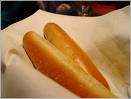
When Marvin eventually returned he brought with him the Olive Garden's signature dish: free bread sticks! A basket of two phallic, warm, chewy mini-loaves of bread clearly pumped with so much bleached flour and preservatives they could stay soft through the next ice age. The OG menu itself was entertaining. General observations: the trans-fat ban in New York could destroy the appetizer section. The "Italian antipaste" was literally a plate of fried food. The special appetizers that night included a mozzarella "fonduta," essentially a bowl of melted cheese you dip bread into, and an artichoke dip, a big, sloppy boat of warm, greenish gruel surely plopped out from canned ingredients.
We did not dare try the specials. Instead, we ordered a refillable salad bowl and a bowl of soup called Zuppa Toscana. The Salad was fine, delicious, actually. An iceberg lettuce base with canned olives and red onion, albeit, but it was lightly dressed and rather cool and crisp. It was no question the best thing on the table all night, especially the tomatoes, which were soft and flavorful, as good as I've had anywhere in the city. The half-star review earned by the OG in our review was earned right there by the tomatoes.
The soup, on the other hand, was a gray, Campbell's-like creation with shredded bits of what i'm guessing was sausage, sliced potatoes, and flecks of a kale-like weed. The soup's key ingredient was salt: it had the salinity of movie popcorn.
For dinner, we opted to play it safe. Spoon had a cappellini pomodoro. While we could discern some fresh ingredients (it was a pomodoro after all) fresh ingredients don't prepare themselves and can still taste like shit, epsecially when prepared by a disinterested, underpaid ex-con line cook working from an Italian recipe supplied by an American mass-market fast-food corporate bohemoth. Spoon's pomodoro sucked. There it is. Not much nuance to add, it just totally...fucking...sucked. The pasta was badly cooked, clearly boiled once, rinsed, cooled, then re-boiled before serving. The sauce looked like someone had run a lawn mower through your nonna's garden and tossed a fistful of the mulch onto a plate.
I had spaghetti and meatballs, not even really an Italian meal, to tell the truth, but then Olive Garden isn't really an Italian restaurant so the order made some kind of twisted sense. My plate was positively institutional. The sauce tasted like the kind you'd drill from a can in any school cafeteria or jail. It was a meal I would've expected to eat in a bomb shelter. The meatballs were gray, hard, possibly microwaved and tasted of the lowest low-grade ground chuck. Luckily, we were ignored by the waitstaff long enough to skip the clearly non-Italian desserts, mostly syrup-strewn cheescakes and chocolate.
Is there a way to do the Olive Garden...and survive? In an interview, food writer Steven Shaw told Spoon he once dined at an Olive Garden while stranded in some backwater burg and made a decent meal out of the soup, salad and breadsticks. Famous Italian chef Marcella Hazan, however, who once accepted a sadistic invitation from USA Today to eat and critique the Olive Garden, hit the nail on the head.
Hazan slammed the food. That's a given. It tastes like shit and you don't need to be a legendary Italian chef to know shit when you eat it. But Hazan declined the low-hanging fruit and rather than bash the food for being shit, she derided the OG's very existence embodied in their penchant for creating fake Italian dishes as an excuse to drench things like a chicken breast or a steak in four cheeses and olive oil. "There are 60,000 recipes in Italy." Hazan told USA Today, the Olive Garden of American newspapers. "Why do they have to invent new ones?" --F
Monday, December 04, 2006
Best in Chow

Grand Sichuan
227 Lexington Ave.
(btw. 33th, 34th Street)
(4,5,6 to 33rd Street)
NY, NY 10016
Tel: 212-679-9770/9771
THREE SPORKS
When I first moved to New York, a fresh-faced young grad in 1989, I made a whopping $13,500 annually as an editorial assistant at Penguin USA. Ah, so much promise, so many hopes and dreams. So little cash.
Like my non-trust-funded peers in publishing, I had little choice other than to subsist on Chinese food, ordering bountiful two-dollar quarts of Lo Mein pretty much every night. Back then my affinity for Chinese cuisine was poverty-driven. I could have eaten shredded newspaper for all I knew. The price was right, the shiny noodles nicely soaked up the booze I devoted most of my disposable income to, and there were often greasy leftovers to salve a painful hangover. It’s fun to reminisce, isn’t it?
Speaking of hangovers, I got one from too much Chinese food. For years I swore off the stuff entirely, emotionally and intestinally scarred from too many forced-feedings at those little neighborhood woks: you know the ones: a cook, a cashier, a freezer and a vat of boiling oil behind three inches of misty, bullet-proof glass adorned with a numbered, pictorial menu. Yes, after months of indulgence, I blew out my palate and fell face down in my pu-pu platter. I opened my fortune cookie that night, and it read: you’re fucked.
After a lengthy period of culinary rehab, however, I was back--and with both a more refined palate and a more adventurous diet than the one forged in the salty crockpots of my youth in Central New York. Thanks also to a, well, a modestly expanded food budget, I rediscovered the gastronomic pleasures of the Orient, from the white-coated waiters and high-end prices of Mr. Chow and Shun Lee Palace, to the dingy authentic Chinatown kitchens. Have the Wor Wonton soup at Hop Kee, or Dim Sum at Chelsea House and you'll know what I mean.
Today, when the question is “ni yao chi wufan ma?” my answer is yao!
That's all for another post. When talking about Chinese food in New York, we’re usually talking delivery. And today, I’m crowning a new champion: Grand Sichuan, in Murray Hill. It’s authentic and nicely spiced dishes add a newfound excitement to what has become the boring old idea of ordering in Chinese food.
For those of you not familiar with Sichuan (or Szechuan) cooking, it is the hot and spicy sister of the milder Cantonese offerings. Originating in the Sichuan Province, located in the hot, humid climes of southern China, Sichuan hallmarks include stir frying and ingredients like the Sichuan mala, or the “numbing pepper,” A fragrant, powerful, almost citrus-like spice, along with things like ginger and bean chili paste. Kung Pao chicken is an example of a popular Sichuan dish.
There are plenty of milder dishes on Sichuan menus as well, but, well, why would you bother? If you’re going to enjoy Sichuan cooking, go for the spice. The flavors offered by Grand Sichuan’s spicy dishes are intoxicating, yet not overbearing. You’ll feel the heat, yes, but not so much as to overcome other elements carefully balanced in these dishes.
We recommend the cellophane noodles with minced pork, thin, clear rice noodles, that take on both the frangrance and hue of the pepper and the flavor of the pork; Beef with snow peas and carrots, the meat pounded to softness and prepared with a dusting of Chinese rice flour that produces a rich gravy; and don’t miss the spare ribs in spicy sauce. Little pork ribs, almost Korean style in how they fall off the bone, served in a hot and peppery sauce with slightly poached celery and cut with soothing fresh cilantro.
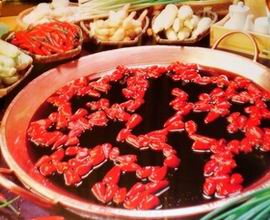
From all we’ve seen and heard, dining in at Grand Sichuan leaves something to be desired service-wise. But if you’re dining in at a Chinese restaurant and critiquing the service, you’re missing the point, so just leave your 10-percent tip and get the fuck out of New York, there’s an Applebee’s waiting for you somewhere. Spoon and me will almost certainly dine in at Grand Sichuan soon, if only to try their version of the authentic Sichuan torture, um, delicacy known as the “hot pot" (pictured above). The hot pot is the most famous and favorite dish in Chongqing. It was first eaten by poor, obviously masochistic boatmen on the Yangtze River and has now become the specialty of an obviously masochistic region. It involves gathering around a small pot of atomic, peppery soup base boiled over a fire (or in nyc, electric burner) into which you dip slices of raw meat, fish, bean curd and vegetables Shabu Shabu style, boiling them in the soup base. You then dip them again into a little bowl of special sauce before eating.
When Anthony Bourdain visited China on his excellent show, No Reservations, he sat around a hot pot with his guides and sweated like he was sitting on nails in a Sauna. Now that’s good TV!--F
Subscribe to:
Posts (Atom)